
What's slowing down your audits? 201 practitioners told us

- Updated at
"We usually provide the screenshots from the same menu over and over to prove the system has not been changed." That's how one respondent from our latest survey described their audit season in a single sentence. If this sounds familiar, the numbers tell an even bigger story.
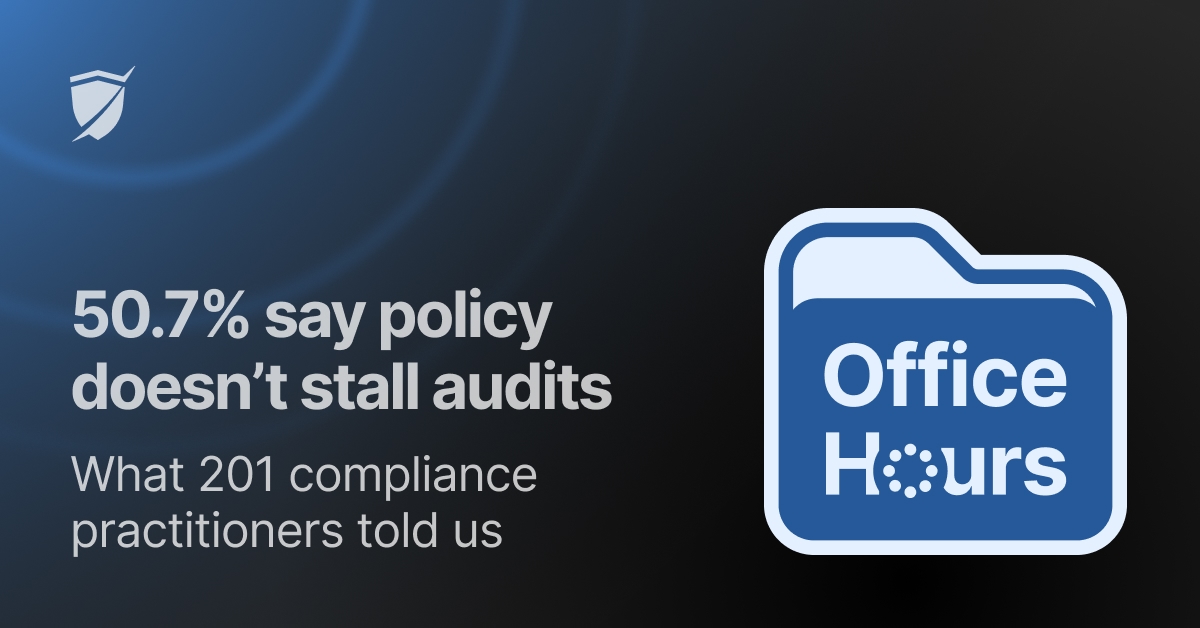
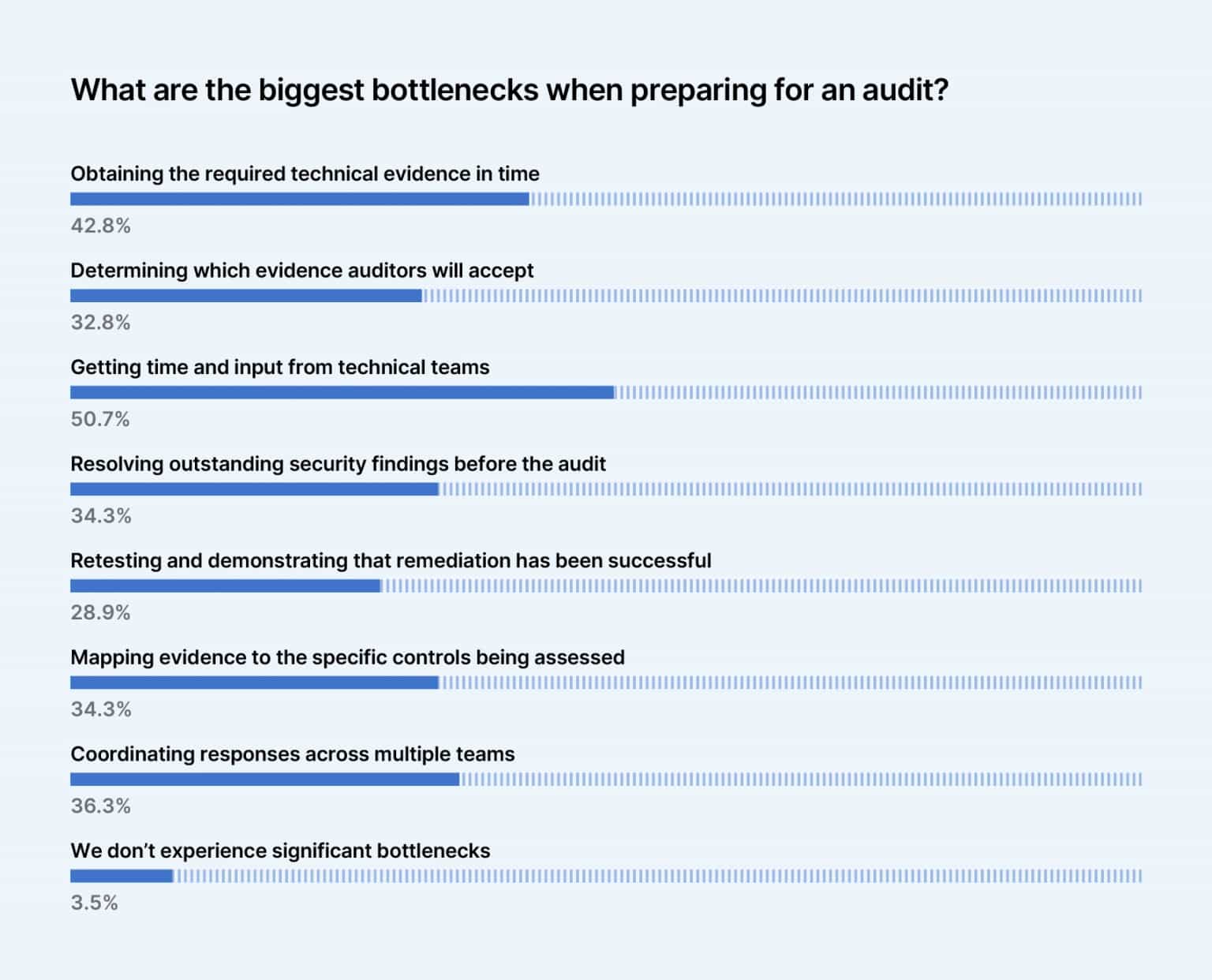
Here's the headline: 50.7% of the 201 practitioners we surveyed say getting time from technical teams is their biggest audit bottleneck, not documentation, not policy.
Let's get into why that happens, and what actually helps.
The reputation problem
Compliance has a reputation problem inside security teams. People describe it as paperwork, a checkbox, something that interrupts real work. Our survey: The audit bottleneck isn't policy. It's proof. probed 201 security and compliance practitioners to understand where security, engineering, and compliance teams face the most friction turning vulnerability data into compliance evidence.
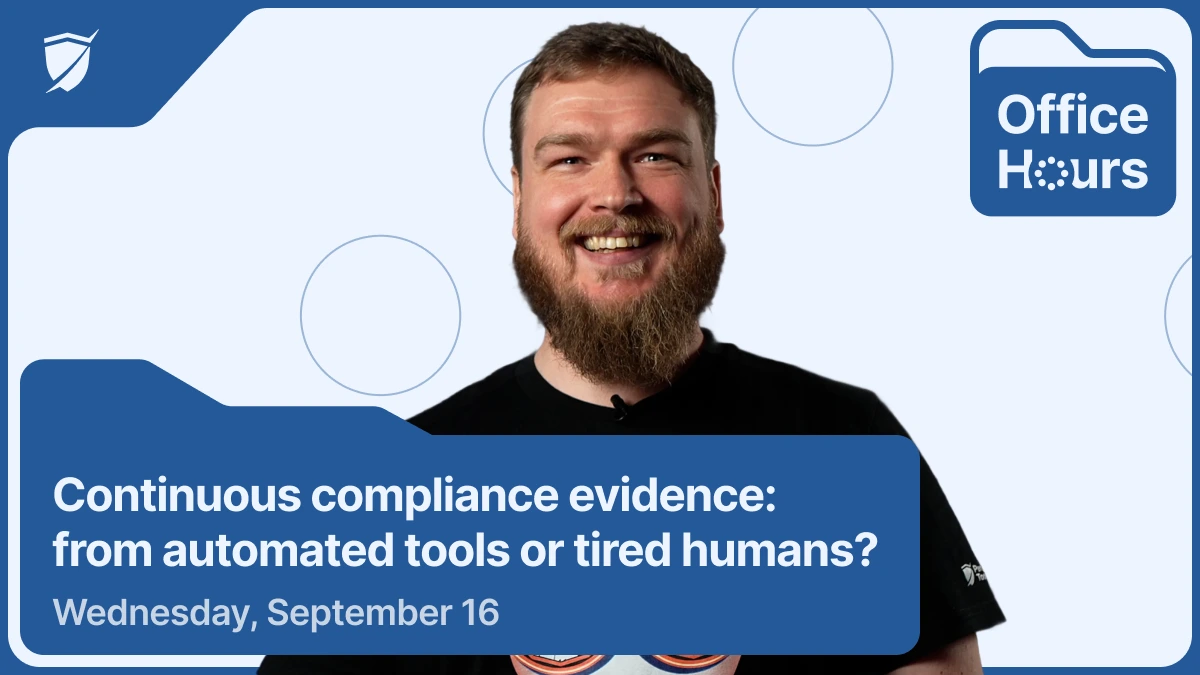
Jan Pedersen, our Channel Account Manager, walked through some of the findings live on our Office Hours #11, and he mentioned:
This is something I was actually quite surprised about. I thought the primary problem would be documentation, getting information from one place to another. But it turns out getting time from the technical staff is so much more of a bottleneck than I anticipated. - Jan Pedersen, Channel Account Manager, Pentest-Tools.com
That reaction matches what came back. If you ask what slows audits down, the assumption is usually documentation, policy, paperwork. But the data points somewhere else:
Why technical teams became the bottleneck
Here's the part that explains it: the security assessment itself has shifted from annual to continuous. 60.2% of respondents now assess security controls at least monthly, 37.8% of those continuously. Only 9.5% still work to an annual model: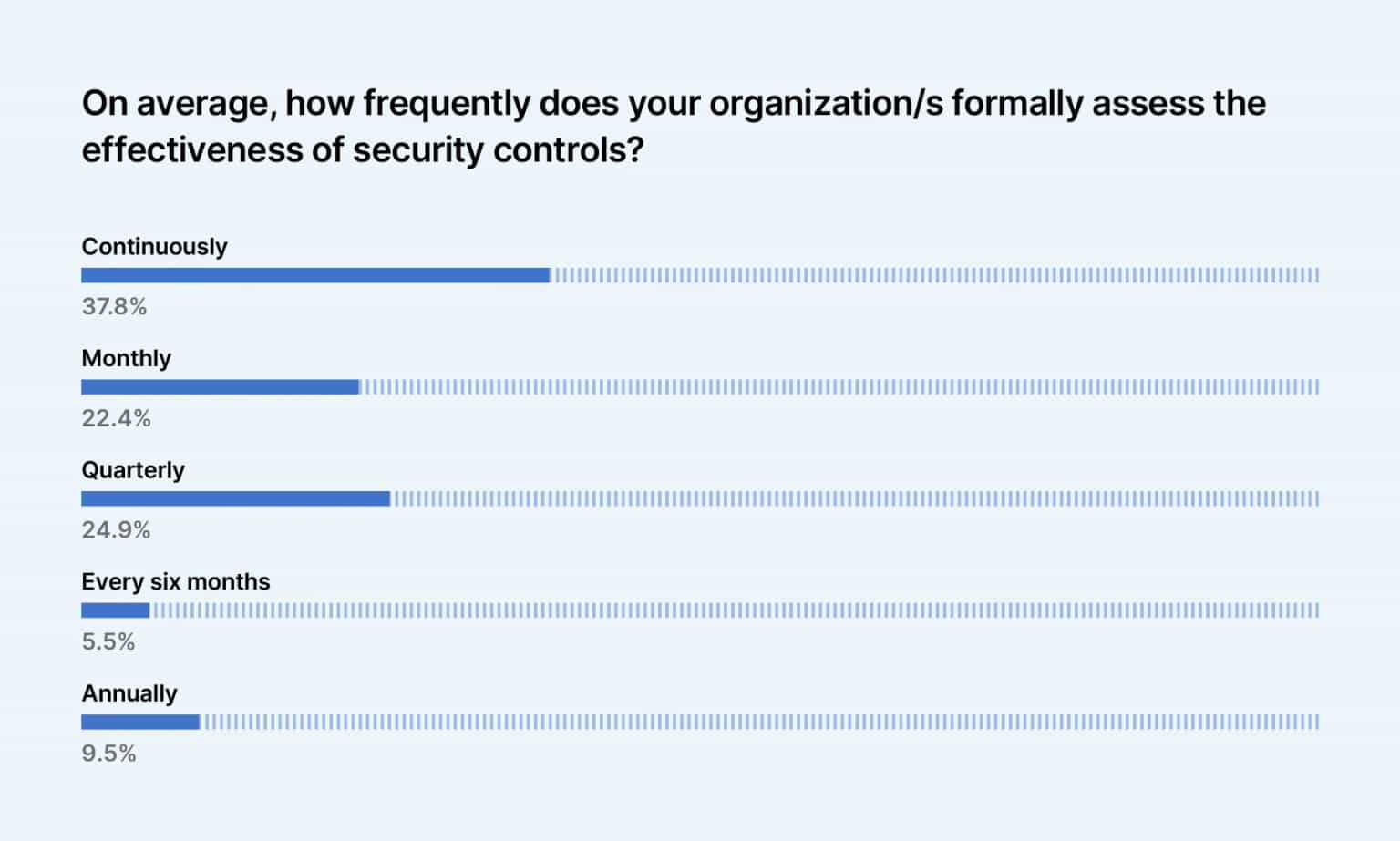
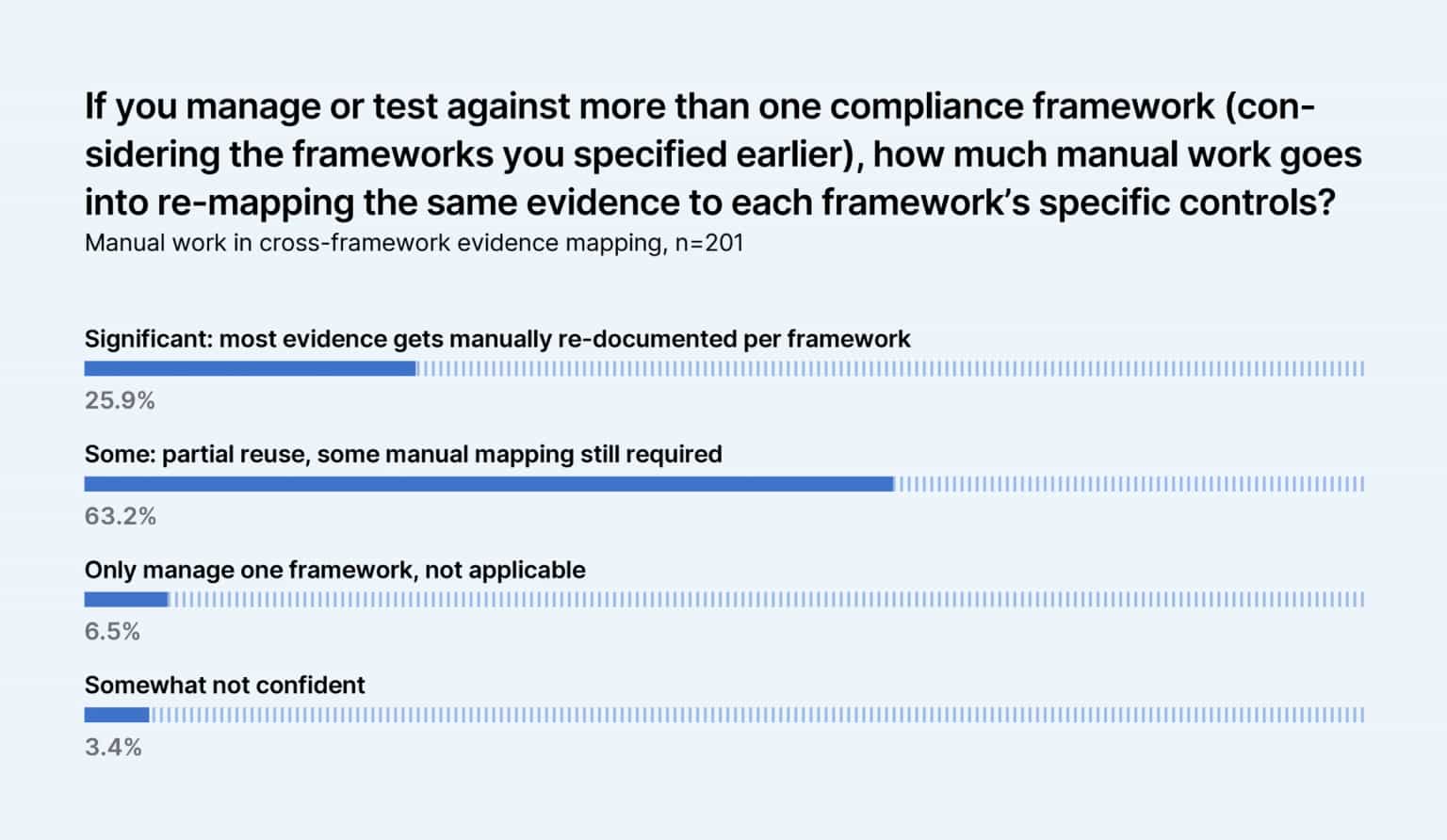
Nearly 9 in 10 practitioners in our sample still manually map or re-document evidence across compliance frameworks. If your organization holds more than one certification then that number gets personal fast. You prove the same scan result, the same control, separately for each framework you hold, because most tooling still can't reuse evidence across them automatically.
One respondent described the mismatch between how fast their own team moves and how slowly everyone else responds:
Change the way the other teams handle their work. Our side is always up to date, running. Other teams take days to even reply.
Where practitioners disagree with themselves
The survey showed something genuinely contradictory.
When practitioners could write in whatever they wanted, automation and integration together made up 33.5% of what people said they'd change first. And integration on its own was one of the most-mentioned wishes.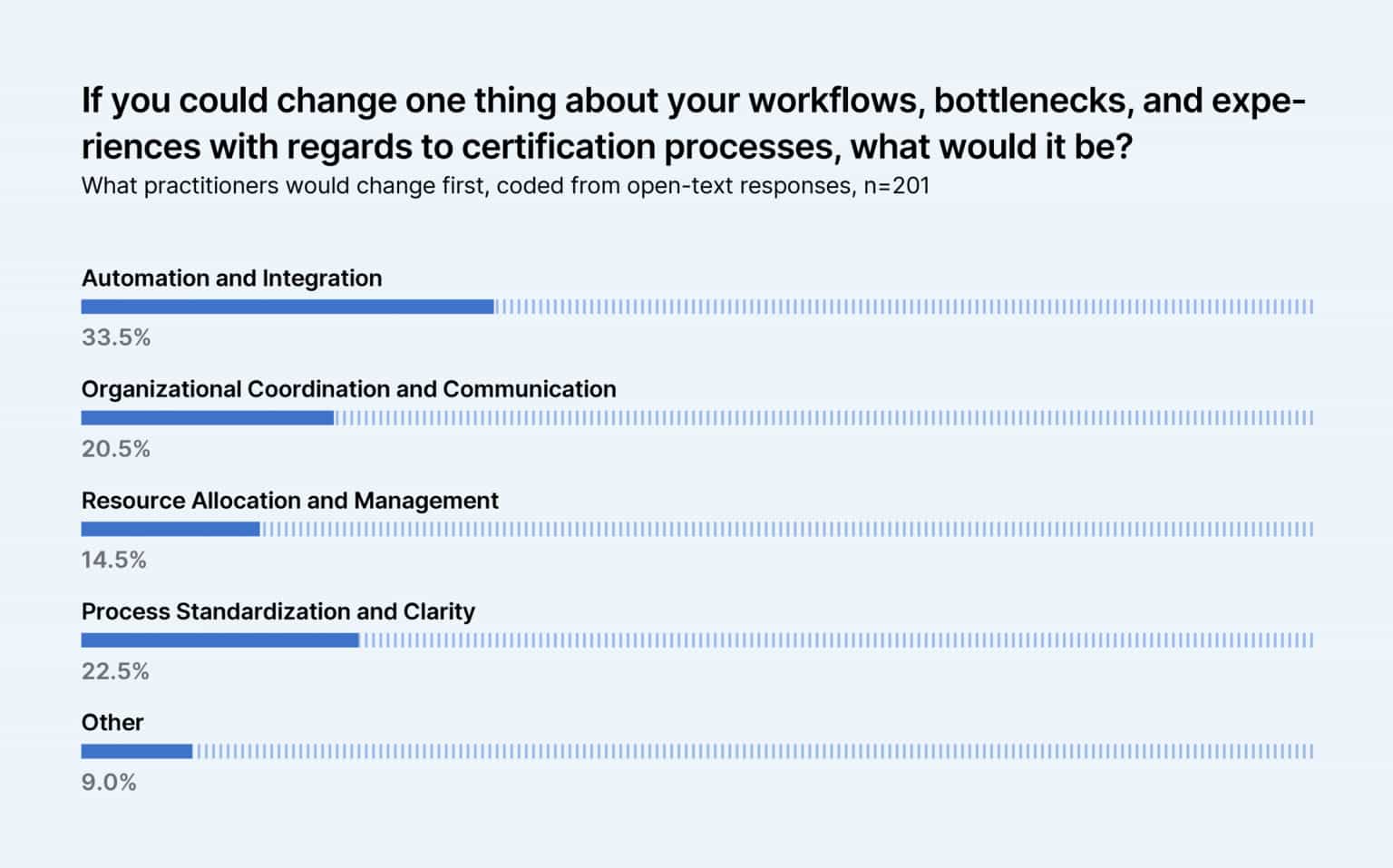
Jan put it this way during the session:
People were forced to choose where they needed to rank the different parts of the different wishes, and integration became much less relevant. Whereas when they were just typing in, the first thing that came to mind was often integration. But when they are presented with the different options, automation becomes much more front of mind. - Jan Pedersen, Channel Account Manager, Pentest-Tools.com
If you're the one who has to make this case internally, lead with automation, not integration, that's the order the data actually backs. Jan's practical framing for why that argument lands with budget holders:
We all know that time is money, and at the end of the day, the time taken from the technical staff could be almost directly converted to budget for automation of those same tasks. - Jan Pedersen, Channel Account Manager, Pentest-Tools.com
That's the sentence that gets the budget approved.
What the live demo showed
Jan didn't just talk through the numbers in our latest survey, he also walked through the workflow behind scan diff notifications, tying each piece back to what auditors ask for:
proof a vulnerability existed
proof it was validated
proof it was remediated
proof the fix held
Worth naming why that validation step matters in the first place: traditional scanners tend to produce a long list of false positives, which keeps the work manual even after the scan itself finishes automatically. You end up spending the time you saved on the scan re-checking whether any of it was real. Our earlier AI pentesting survey found a similar pattern when AI enters the picture: nearly a third of respondents named hallucinated findings and false positives as their single biggest frustration with AI-assisted tools, ahead of cost, ahead of everything else we asked about.
A few concrete things worth knowing about the workflow if you haven't set it up yet:
Scheduling a scan against the same target, same workspace, same tool is what makes a later scan diff meaningful. Set the cadence once, weekly or monthly depending on your framework, and nobody has to remember to click run again.
Notification triggers live under Settings → Notifications. Set the trigger to Vulnerability → Diff → from previous scan, and you get alerted the moment something new appears, changes, or disappears, without checking manually.
Confirmed findings carry a visible label once the product has gathered real exploit evidence, not just a version match. Anything already ruled out as a false positive gets removed before you ever see it.
Sniper currently covers almost 200 exploit modules. Every one is hand-built by our in-house research team and runs deterministically, the same steps every time.
Reporting covers PDF, HTML, CSV, and XLSX on any plan. Beyond the raw findings, this generates continuous evidence, validated findings, retest history, and scan diffs, relevant for frameworks like DORA, NIS2, SOC 2, CRA, and ISO 27001. A fully editable version is also available in DOCX format, Google Doc compatible, and includes the narrative context SOC 2 and ISO audits usually expect. You can use it if you need to adjust the report afterward.
Findings can go straight into Jira or Nucleus Security for tracking, and the product integrates directly with GRC tools like Vanta, so evidence flows into whatever process already owns your compliance tracking.
Three depths of testing
Frameworks don't all ask for the same kind of evidence, so there isn't one right way to test for compliance, there are three. Which one applies depends on what your specific framework and your specific auditor require.
Scanning and validation, what the demo covered, gives you continuous monitoring and full control over what gets tested, how, and when.
AI Pentests, currently in early access, autonomously runs an attack simulation against a web application without waiting on a manual pentest slot.
Human-led testing, from our certified Offensive Security Services team, is the right call when business logic, complex attack paths, or third-party attestation require actual expert judgment.
With Pentest-Tools.com, you move between these as the target or the situation demands, without changing vendors or breaking your workflow.
Frameworks are rarely explicit about which one you need. The requirements tend to stay high-level: get information about your vulnerabilities, evaluate your exposure, take appropriate measures. What that actually means in practice is usually left to your auditor's interpretation, not a fixed rule.
Where this leaves you
Nothing in this survey suggests the pressure eases from here. Assessment cadences will keep tightening, and the frameworks organizations juggle will keep multiplying.
What can change is how much of the evidence behind that work comes from automated tooling instead of someone retaking the same screenshot every month.
The full survey is live, free to read, no signup required: The audit bottleneck isn't policy. It's proof.
Watch the full Office Hours #11 session for the complete demo and live Q&A: